
Systems Thinking & The Internet of Things

Everything and everyone connected everywhere. The Internet of Everything becomes a ginormous pulsating organism? social structure? ecosystem? Whatever its nomenclature, it will be a system of non-linearity increasingly obvious in a world where most humans prefer their explanations in simpler linear predictability.

Some posit that this ubiquitous interconnectedness will be evident in 10 years. In traditional education terms, that’s equal to 4 years at college, 4 years of high school and two years surviving junior high. So we can think of those 6th-graders, 12 years and straining to reach the anticipated glories of adulthood. By the time that they finish with another decade of formal education, we can easily imagine them as facile participants in this digitally-connected world. Guessing the number and power of connected computers that will be part of their lives is about as difficult as determining the number of gum balls in a pickle jar. The iPhone5 has the processing power of the Apollo Guidance Computer. Your car already has upwards of 50 computers and millions of lines of code. My refrigerator has a usb port.

How can we ensure that our imaginary 6th-grader will reach 2025 with the abilities of a system thinker? How often will simulations and modeling be part of that decade of education? When will visualization and other transformations of data become as requisite as writing? When will our student learn to code and explore the properties of feedback loops?

Preparing humans for successfully living in a dynamically interconnected world won’t be accomplished by adhering to a machine-age mental model of education that continues to treat learning as a collection of isolated and linear events. Making sense of the continual dynamics emerging from the Internet of Everything will require thinking more holistically than most people now do. Transitioning from the now to the expected should have started yesterday.
An attic for everyone

Data and information are swamping us.  So what – that’s old news, you say. But if you’re on the data service providing end at a college or university, you are only too aware of the insatiable storage demands of your clientele. The cause is simple – the handy, obvious physical restraints of the past are gone. Remember file cabinets stuffed from front to back and books piled on the floor when the shelves were filled? With the exception of true hoarders, we determined what to keep and what to discard on a rolling basis over time.

The digital world entices us with freedom from physical constraints. Much like Groundhog Day, our digital lives unfold in an endless pattern of create, acquire and save that occurs without deterrents. The cost of choosing what to keep and what to trash is much too high – it requires what is now most rare – our focused attention. So we never actually delete.  We might curate, but that only brings some things into focus; the others remain waiting in the background. Editing happens with revision histories, not wadded papers discarded in the bin. Emails marked as read continue scrolling downward into a deepening well of messages. Meanwhile your local data center struggles to satisfy the insatiable demand for storage.

Amazon announced Glacier today offering 1 GB for 1 penny per month. Lease as much as you need for a very low price. The catch – it is named appropriately. It is archive storage. If you want to retrieve something, plan on it taking hours rather than minutes.  But this seems to be a reasonable decision point that all of us could make as we confront our data – put it into the attic or leave it out in the room.

Books and DNA

It happens more quickly now. The it is an observation, conversation, published research, tweet, chance encounter that reveals yet another way that zeros and ones, the binary digital world, reveals itself changing our expectations. Yesterday afternoon it was the revelation of a library in a test tube. Thank you Watson and Crick.

The laboratory as a library?

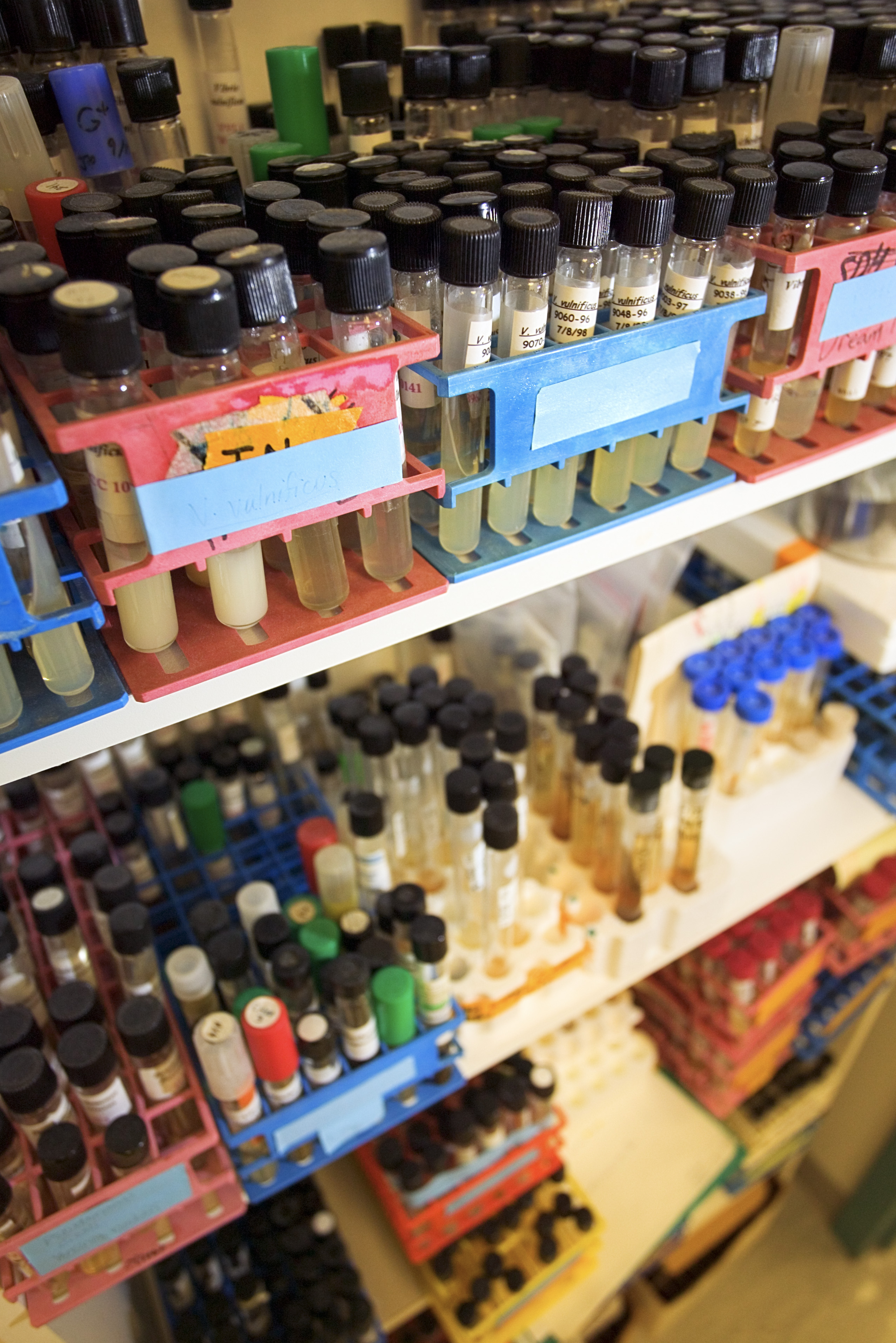
And this wasn’t a trip into sci-fi literature. It was the Wall Street Journal – yes, the authoritative source of all news financial and not especially prone to flights of fancy other than an occasional gush over an impending IPO. With the low-key, but significant headline of Future of Data:Encoded in DNA, a story describes the successful efforts of a Harvard research team to translate a book on genomic engineering into actual DNA. The book would have required the digital space of a 3.5 inch floppy disk (if you immediately visualize this, realize that you are old), but instead fit comfortably into a small laboratory vial. After encoding the book into DNA, the words, illustrations and computer code all reducible to zeros and ones, the researchers read it back into a digital format ready for a print publisher.